
Carb Timing & Types: The Smart Way to Eat for Fat Loss and Hormone Balance
For years, carbs have been wrongly labeled as the enemy of fat loss. But the truth is, carbohydrates are not the problem—poor timing and poor choices are. Understanding when to eat carbs and what kinds to eat can radically transform your energy, hormone health, fat loss, and recovery.
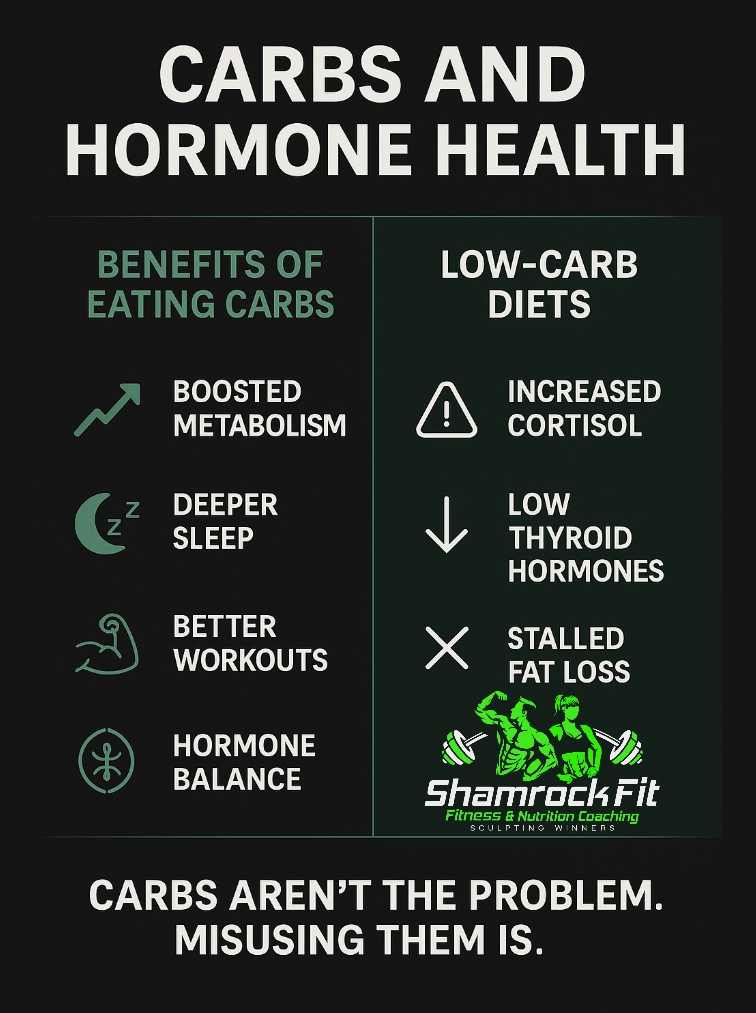
Carbs don’t make you fat—your body actually needs them to thrive. Carbohydrates play a vital role in hormone balance, metabolism, energy, and even your sleep. The problem isn’t carbs—it’s eating the wrong kinds at the wrong times. When you understand how to time your carb intake and choose smart sources, you unlock the potential to burn fat, recover faster, and feel your best
Even as a diabetic, you can still enjoy carbs—you just have to be smart about it. Carbohydrates aren’t the enemy; they’re fuel for your body and brain. The key is focusing on quality and portion control. Whole-food sources like berries, oats, sweet potatoes, and brown rice digest more slowly and help keep your blood sugar stable. Pairing carbs with protein or healthy fats also slows down absorption, preventing spikes. Instead of cutting carbs completely, learn how to time them around activity and choose the right kinds. That way, you can still enjoy your meals while managing your blood sugar like a pro.
🕒 When to Eat Carbs: A Hormone-Smart Timeline
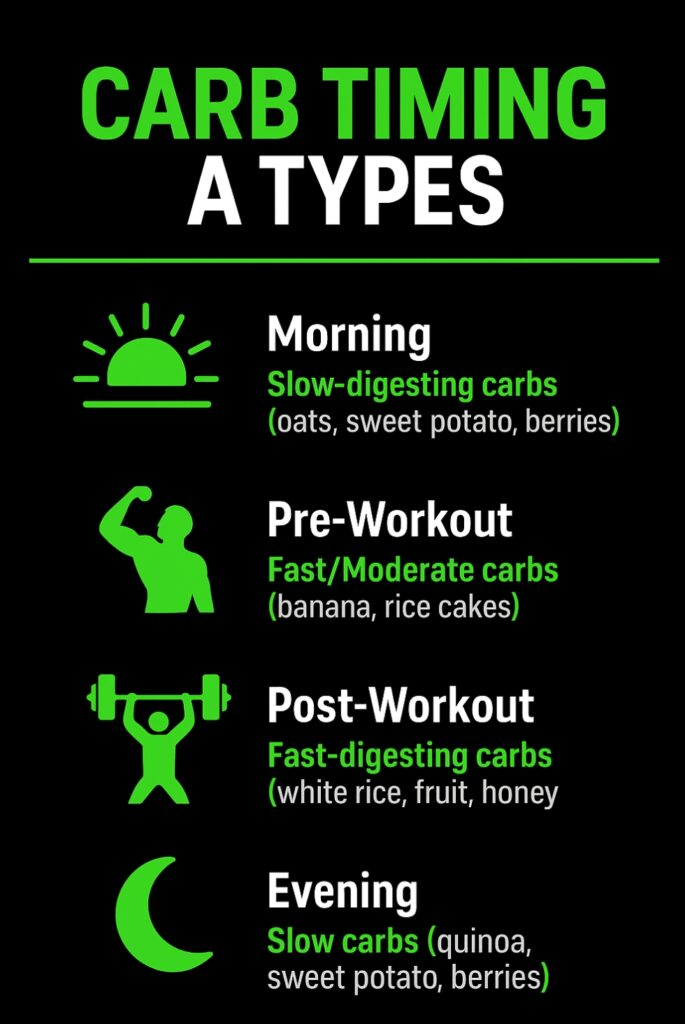
🌅 Morning: Start your day with slow-digesting carbs like oats, sweet potatoes, or berries. These help stabilize blood sugar, support healthy cortisol rhythms, and aid thyroid function.
💪 Pre-Workout: Fuel up with fast to moderate-digesting carbs such as bananas or rice cakes. These provide quick energy, reduce muscle breakdown, and optimize workout performance.
🏋️ Post-Workout: This is the golden window for simple carbs like honey, fruit, or white rice. Your muscles are primed to absorb nutrients, insulin spikes drive recovery, and cortisol levels drop.
🌇 Evening: Yes, you can eat carbs at night. Slow-digesting carbs like sweet potatoes, quinoa, and berries help boost serotonin production, lower stress, and improve sleep quality.
🍞 Types of Carbs & Their Role
1. Complex Carbs Examples: Sweet potato, brown rice, oats, quinoa Use for: Blood sugar balance, hormone health, and steady energy.
2. Simple Carbs Examples: Fruit, honey, white rice, rice cakes Use for: Fast energy, workout fuel, post-training recovery.
3. Refined Carbs Examples: Donuts, soda, pastries Use sparingly: Cause energy crashes, insulin spikes, and inflammation.
🔑 Key Takeaway
Carbs don’t make you fat—poor timing and poor choices do. Use carbs with purpose, not fear.
Need a customized, hormone-smart carb strategy? DM “TIMING” to @ShamrockFit and take control of your metabolism.
🧠 How Carbs Support Hormone Health
1. Lower Cortisol: Carbs post-workout or in the evening help reduce the stress hormone.
2. Boost Thyroid Function: Your thyroid needs glucose to convert T4 to T3. Low-carb diets can suppress this.
3. Regulate Insulin: Complex carbs allow for stable insulin release, fueling muscles and keeping energy steady.
4. Improve Sleep & Serotonin: Carbs help with serotonin production, supporting mood and deep sleep.
5. Reproductive Hormones: Women need adequate carbs to support menstrual cycles and fertility.
6. Hunger Hormone Balance: Carbs stabilize leptin and reduce ghrelin, helping with satiety.
7. Testosterone Boost: Adequate carbs support testosterone in active individuals.
8. HPA Axis Support: Carbs help buffer the effects of chronic stress and under-eating.
9. Recovery & Muscle Growth: Carbs post-workout enhance recovery and anabolic response.
10. Fertility & Amenorrhea Prevention: Reintroducing carbs can restore ovulation in under-fueled women.
❌ How Low-Carb Diets Can Wreck Hormones & Stall Fat Loss
Thyroid Downregulation – Low carbs = poor T3 production = fatigue and slow metabolism.
Increased Cortisol – Low carbs = chronic stress = belly fat and muscle loss.
Leptin Suppression – Metabolism slows, hunger increases.
Hormone Imbalance – Especially damaging for active women.
Low Testosterone – Less muscle, lower drive, more fat.
Worsened Insulin Resistance – Reintroducing carbs may spike blood sugar.
Adrenal Burnout – Low-carb + training = HPA dysfunction.
Sleep Disruption – Low serotonin = low melatonin = poor recovery.
Hunger Spikes – Low carbs elevate ghrelin, leading to binge risk.
Slow Recovery – No glycogen = no repair = stalled progress.
Final Word
If you’re serious about fat loss, hormone health, and long-term results, it’s time to stop fearing carbs and start using them strategically. Fuel with intention. Eat with purpose. And if you’re tired of guessing, ShamrockFit is here to create a personalized plan that works with your body—not against it.